

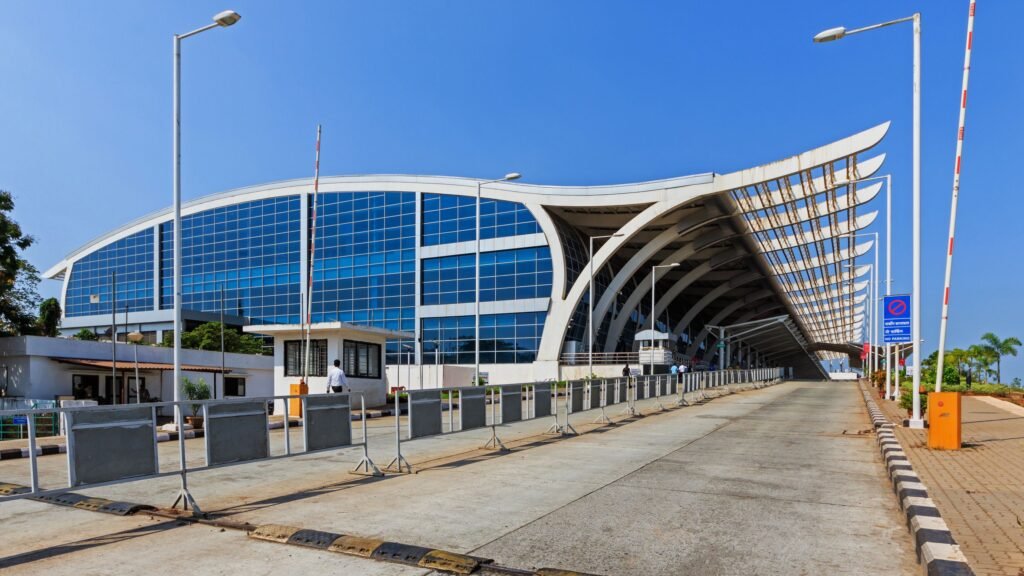
India’s aviation sector has witnessed remarkable growth over the past two decades, transforming the country’s airports into modern, efficient, and globally competitive travel hubs. From bustling metropolitan terminals to rapidly developing regional airports, India’s airport infrastructure plays a crucial role in connecting people, boosting tourism, and driving economic progress.

Evolution of Indian Airports
In the early years after independence, India’s airports were limited in number and basic in infrastructure. However, with economic liberalization in the 1990s and the rise of air travel demand, the government began investing heavily in modernization and expansion. Public-private partnerships (PPPs) became a key model, allowing private players to contribute to the development and management of major airports.
Today, India is one of the fastest-growing aviation markets in the world, with dozens of operational airports and many more under construction.
Major International Airports
India is home to several world-class international airports that serve millions of passengers annually:
- Indira Gandhi International Airport (Delhi): Known for its advanced infrastructure and high passenger capacity, it consistently ranks among the top airports globally.
- Chhatrapati Shivaji Maharaj International Airport (Mumbai): A major gateway to India, famous for its architectural design and efficient operations.
- Kempegowda International Airport (Bangalore): A rapidly expanding hub catering to India’s tech capital.
- Rajiv Gandhi International Airport (Hyderabad): Recognized for its sustainability initiatives and passenger-friendly services.
These airports are equipped with modern terminals, digital check-in systems, cargo facilities, and world-class lounges.
Regional Connectivity and UDAN Scheme
To make air travel accessible to smaller cities and towns, the Indian government launched the UDAN (Ude Desh ka Aam Nagrik) scheme. This initiative aims to enhance regional connectivity by making flights affordable and developing underutilized airports.
As a result, many tier-2 and tier-3 cities now have operational airports, boosting local economies and tourism.
Technological Advancements
Indian airports are rapidly adopting cutting-edge technologies to improve passenger experience:
- Biometric boarding systems for seamless travel
- Self-check-in kiosks and e-gates
- Smart baggage handling systems
- Digital payment and contactless services
These innovations reduce waiting times and enhance overall efficiency.
Sustainability and Green Airports
With growing awareness of environmental concerns, Indian airports are taking steps toward sustainability. Some airports have adopted solar power, rainwater harvesting, and waste management systems.
For example, Cochin International Airport became the world’s first fully solar-powered airport, setting a benchmark for eco-friendly aviation infrastructure.
Challenges and Future Outlook
Despite significant progress, the Indian aviation sector faces challenges such as airspace congestion, high operational costs, and infrastructure strain due to rising passenger numbers. However, ongoing investments and policy reforms aim to address these issues.
Looking ahead, India plans to develop over 200 airports in the coming years, positioning itself as a global aviation hub. With increasing demand, technological innovation, and infrastructure expansion, the future of Indian airports looks promising.
Conclusion

Indian airports are more than just transit points—they are symbols of the country’s growth, ambition, and global integration. As the aviation sector continues to evolve, these airports will play an even more critical role in shaping India’s economic and social landscape.
Whether for business, tourism, or connectivity, Indian airports are truly the gateways to a dynamic and rapidly progressing

Leave a Reply